

The well-known cousin of the wolf is dogs, and today Lobos we’re unveiling the long and winded history of these canines in the fashion scene. With strange origins and even stranger catalysts for popularity this facet of human compulsion will–at the very least–move you to seek out the origins of even the most bizarre concepts.
Dogs and handbags are definitely a strange combination. Still the history of this trend predates popstars and celebrities in juicy couture. Throughout ancient societies small dogs were prized for their talent in hunting and acting as lap warmers on cold nights. When we consider this companionship between humans and canines, the intertwining of fashion, utility and partnership becomes clearer. Embedded in the root of our love for these creatures we consider our own in every way but blood, there is a need for inclusion and celebration. It is in this togetherness that the beauty we see in our dogs and within ourselves materializes and takes the form of a dog in a handbag.
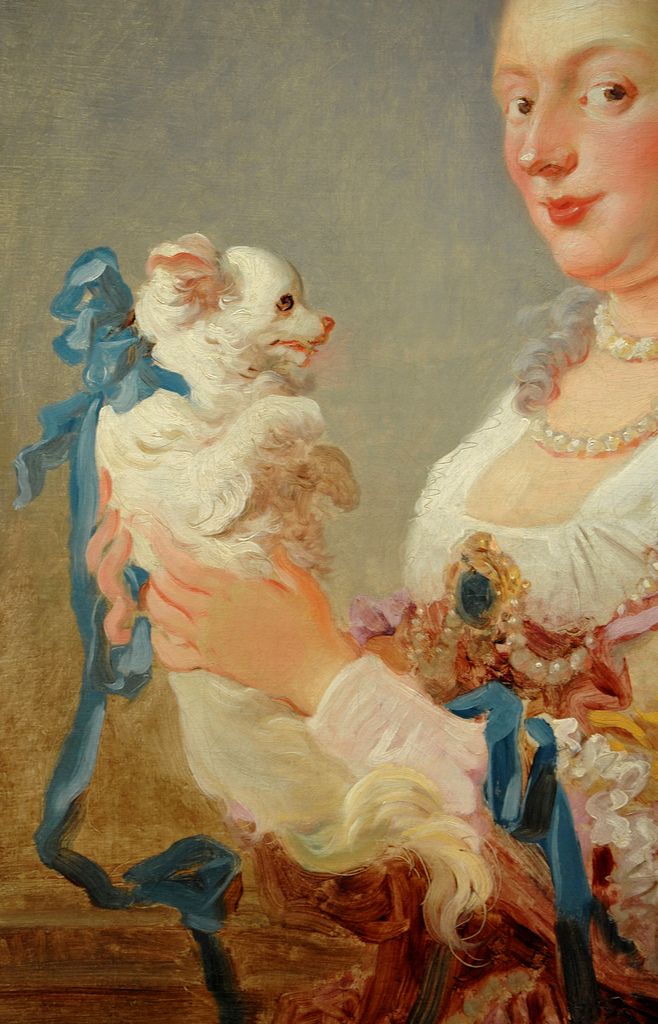
During the Renaissance, European nobility found a certain prestige in owning small dogs. Finding favor in the aristocracy is where dogs like the Italian Greyhound and the Maltese first saw themselves in the spotlight of high fashion. Depictions of nobles with their small dogs in paintings and accompanying them to public settings like parks were all the rage. This era marked the future of small dogs becoming symbols of status and wealth. In continuing this idea small dogs went through a transitional period of going from hunting dogs to being seen more as accessories for the rich. Usually where the rich go is where royalty has lingered.
In the Victorian era, the evolution of the relationship between small dogs and humans continued to evolve. A known dog lover, Queen Victoria, preferred smaller breeds of canines. The Queen’s choice of Pomeranians as her companions influenced trends and the opinions of the public. So, the fashion statement of carrying these smaller dogs in bags began to take shape. As high society women aimed to imitate the Queen specifically designed bags and baskets for carrying small dogs were crafted and seen as an extra flair of luxury to one’s attire. Soon the fashion industry began to experience profound change, and still this trend of carrying smaller canine companions remained steady and popular.
In the 20th century, the rise of Hollywood continued to propel the popularity of small dogs. Celebrity influence saw immense traction in this trend. Movie stars like Audrey Hepburn and Elizabeth Taylor played a crucial role in the continuation of keeping these canines in the spotlight. Being seen in photographs with A-list stars led to the notion that carrying your dog in a handbag was “chic”. As the late 20th century and early 21st century saw icons like Paris Hilton uphold these fashion standards, however, their ways of continuing this trend became less and less… humane. Breeding methods and purposes became less about bringing healthy pups into the world and more about the way they would look inside a personalized handbag.
In humanity’s want for validation from peers, we have created an industry built on the genetic deformities of small dogs. Picking the qualities we want and creating to take advantage of our trusted companions is a special cruelty. As stated in this quote from Britannica,
“The ofttimes incestuous genetic gymnastics required to produce these ever-more-portable companions, it turns out, have some rather nasty side effects.” Pallardy, R. (2017, May 22). Hell in a Handbag. Encyclopedia Britannica.
What started as a lighthearted way of including your pup in your everyday life became twisted somewhere along the road. High demand and human greed took the wheel on what should’ve bonded humans and dogs evermore. Now an argument on the welfare of small dogs’ rages on.
Some argue that there are safer ways of breeding small dogs. Doing this, however, takes patience and careful consideration. Ensuring that breeders pay close attention to the well-beings and environment of the canines is incredibly important. Understanding genetics and other factors that could be passed down to puppies is the start of fixing centuries of harmful breeding practices. In truth many of these steps can be enforced by consumers if we demand more humane courses of actions, we can attempt to overwrite the many mistakes we’ve made in our participation of this industry. Through introducing a nutritious and stress-free life to these dogs we take a step forward into a better future for our long-time companions.
Despite whatever stigma has formed in these past few years, the sight of a chihuahua in a handbag is a common one. The merging of fashion and function is becoming ever coveted in today’s day. It just so happens that placing your canine companion in a bag is one of the first instances of this. Fashion is constantly changing and so does the way humans think. Completely in control of our trends it seems the environment and the life around us has faced the flames of our ignorance. We must remember that mindfulness and consideration is ever important when it comes to self-expression and the inclusion of animals that have been with us since we could stand on two feet.
Closing off, handbags and small dogs have a long, long history together. Reflecting societal shifts and having a multifaceted relationship, they have ruled a large part of the fashion industry. While what started as a mere use of utility has completely changed the bond between humanity and dog. As expectations and trends evolve, we must wonder to ourselves…will this trend remain with us? Or will it leave us after centuries of popularity? While I can’t say for sure, I do know that the next time I see a Pomeranian in a handbag I’ll be sure to pay my respects, for it is a prime example of existing in the context of all that has come before us.