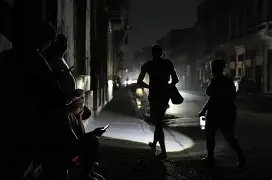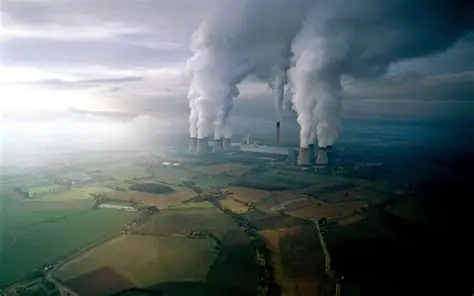


One of the most overlooked problems of our generation is also the brightest. Across the world massive cities like New York, London, and Shanghai have, what feels like, 24-hour days. This never-ending glare emitted by prevalent LEDs and Street Lamps is enough to outshine a full moon. The undeniable volume of this phenomenon should be cause for more alarm than what the common civilian might assume, so let’s dim the overheads and let the night sky show us just how intense the incandescents glow.
The human body works in a rhythm, a constant balance of homeostasis whose absolute importance is far too often downplayed. Understanding this alternative view of ourselves is essential in grasping the influence that anthropogenic light pollution has on the physiological aspect of human experience. Natural processes like the circadian rhythm, which is the body’s 24-hour internal clock, are disrupted by the constant night glow fooling the body into a headspace of eternal sunshine. Hormones like melatonin and cortisol that are responsible for preparing and coaxing the body into sleep need guidance from the circadian rhythm on when to be released.
This is where the harmful impact of constant lighting is most obviously found; when your body has no concept of night or day thanks to the lack of actual darkness then these hormones are never released, ultimately leading to a lack of sleep, heightened levels in anxiety, headaches, and other health issues like cancer. These ever-present light shows don’t just impact on the human population, but other species of animals too.
Newly hatched sea turtles need the light of the full moon to guide them towards the ocean; however, the lights of coastal cities sometimes shine brighter than the moon; leading these sea turtles astray and often resulting in them entering unsafe and bustling environments. On the other side of the animal world’s spectrum, avians are also being negatively impacted by nightglow. According to a 2014 study published in The Condor: Ornithological Applications, researchers Scott R. Loss, Tom Will, Sara S. Loss and Peter P. Marra estimated that bird-building collisions kill hundreds of millions of birds annually in the United States.
“Building collisions, and particularly collisions with windows, are a major anthropogenic threat to birds, with rough estimates of between 100 million and 1 billion birds killed annually in the United States”
The issue of light pollution is seemingly unavoidable; we contribute subconsciously to it through the constant use of our blue light phones and household electricity. So, what steps do we take that can lead us to a darker, yet healthier future for ourselves and our planet?
Our best option is a lot simpler than you might think—just turn your lights off. In an effort to restore the dark sky, towns across the nation like Flagstaff Ariz, have adopted a trailblazing ordinance for the protection of our night skies. There are special regulations set in place on what acceptable outdoor lighting is, and under these rules the night is vibrant, not with fluorescents but the glow of the Milky Way galaxy.
A lack of nightglow allows astronomers to observe the vast expanse of space with much more ease, allowing for new scientific discoveries to be made and community bonding to strengthen over not just the prospect of innovation, but the wonder of star gazing. An activity so renowned for its beauty, it fuels the economies of dark sky towns by drawing in tourists from all over the nation to gaze upon our galaxy in an entirely natural way. Best said by Henry Beston in “The Outermost House”
When the great earth, abandoning day, rolls up the deeps of the heavens and the universe, a new door opens for the human spirit, and there are few so clownish that some awareness of the mystery of being does not touch them as they gaze.
— Henry Beston, The Outermost House (1928)
And through the spectacle of something so natural and accessible these communities have found a way to commercialize their most noble attribute. But are these types of communities possible for larger cities and nations as a whole?
Recent developments reveal that we are heading down the correct path. A study conducted by John Barentine, Director of Conservation at the International Dark-Sky Association, found that skyglow was reduced when streetlights were converted from High Pressure Sodium and Low-Pressure Sodium (HPS/LPS) to White Light Emitting Diode (LED) as told by Dark-Sky,
“Tucson even reduced its skyglow by 7% after its own citywide lighting conversion, proof that communities can bring the stars back with smart lighting choices.”
It took a large amount of human effort to light our night, and the lives we live under those fluorescents are a silver lining of human experience. But what type of life is one lived without the stars in the sky? If we begin to stumble on our path towards the future, then perhaps it’s time to swap those lightbulbs out and look towards the navigation system found in the bright, vast night.