
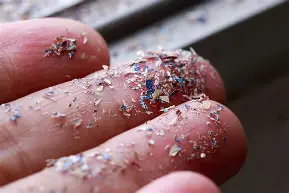
Microplastics are tiny plastic particles less than five millimeters in size, and they have become one of the most widespread forms of pollution in the world. They come from the breakdown of larger plastic items and from everyday sources such as synthetic clothing, car tires, and personal care products. Because microplastics are so small and durable, they persist in the environment and continue to accumulate at dangerous levels.
Microplastics have now been found in oceans, soil, food, drinking water, and even the air. In 2022, scientists detected microplastics in human blood for the first time, raising concerns about potential health effects. According to the World Health Organization,
“Microplastics have been found in food and drinking water, but the effects on human health are not yet fully understood.”
Researchers worry that microplastics can carry harmful chemicals and microorganisms into the body, which may contribute to inflammation, hormonal disruption, or organ damage over time.
The environmental impact is equally serious. Marine animals often mistake microplastics for food, leading to internal injuries, starvation, and death. The United Nations Environment Programme warns,
“Plastic pollution has grown exponentially and now threatens ecosystems, wildlife, and human health.”
The problem is worsening as plastic production continues to rise worldwide. The Organisation for Economic Co-operation and Development projects a sharp increase in plastic waste if no major policy changes are made, stating,
“Without new policies, plastic pollution will increase dramatically in the coming decades.”
Without immediate action to reduce plastic use and improve waste management, microplastics will continue to pose a growing threat to both the planet and human health.